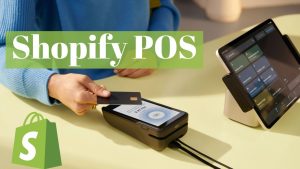
Shopify POS Review UK: Pricing, Pro & Hardware
Shopify POS makes the most sense when your website and physical store are really one retail business. Inventory, customers and orders stay in the same Shopify back office. For a shop that barely sells online, Square can be cheaper and simpler. For an omnichannel retailer, Shopify’s integration is the reason to pay attention.

Compare Shopify with other EPOS providers
Tell us about your shop, locations and checkout requirements to compare suitable EPOS systems on software, hardware, payment costs and support.
Is Shopify POS worth it for a UK retailer?
Shopify POS is one of the strongest choices for a retailer whose ecommerce store and physical shop need to behave like one business.
The main advantage is not the card reader. Shopify can keep products, customer profiles, orders and stock synchronised across your website, shop, pop-ups and other Shopify sales channels.
If a customer buys online and returns in store, or a shop assistant sells an item that needs shipping from another location, Shopify POS Pro is designed around that type of omnichannel workflow.
The downside is cost. You need a Shopify platform plan before adding POS Pro, so a retailer buying Shopify purely for one physical shop may pay for ecommerce functionality it barely uses.
Our buying rule
If Shopify already powers a meaningful part of your online sales, Shopify POS should be on the shortlist. If you mainly take payments over a counter and your website is secondary, benchmark the total cost against Square before committing.
Shopify POS Go is no longer sold
The old version of this guide treated POS Go as a current Shopify hardware option. It is no longer available for sale.
Shopify’s current UK replacement options include:
- Verifone Victa Mobile, an all-in-one handheld running Shopify POS;
- WisePad 3, a compact card reader that pairs with a phone or tablet;
- Shopify POS Terminal, a countertop payment terminal; and
- Tap to Pay on compatible iPhone or Android devices.
Existing POS Go devices can continue in mobile selling mode for a limited support period, but a new buyer should not build a 2026 hardware plan around a discontinued device.
How much does Shopify POS cost in the UK?
Shopify POS has three cost layers:
- your underlying Shopify plan;
- POS Pro if a retail location needs the advanced feature set; and
- payment processing and hardware.
| Shopify plan | Monthly subscription | In-person Shopify Payments rate | POS Pro |
|---|---|---|---|
| Basic | £25/month, or £19/month equivalent billed yearly | 1.7% | + £69/month per Pro location, billed yearly |
| Grow | £65/month, or £49/month equivalent billed yearly | 1.6% | + £69/month per Pro location, billed yearly |
| Advanced | £344/month, or £259/month equivalent billed yearly | 1.5% | + £69/month per Pro location, billed yearly |
What does that mean for one shop?
If Basic is paid annually, a retailer using POS Pro at one location starts at roughly £88/month equivalent for the Shopify platform and POS Pro before hardware, apps and card processing. If you already need Shopify for ecommerce, it is more useful to think of the £69 Pro charge as the incremental retail cost.
Shopify POS Lite vs POS Pro
The old language can be confusing because Shopify does not sell “Lite, Pro and Go” as three equivalent plans.
Casual in-person POS features are included with Shopify’s paid platform plans. These are often still referred to as POS Lite in comparisons.
POS Pro is the £69/month per-location upgrade for permanent retail stores that need more advanced staff, inventory, returns and omnichannel workflows.
| Feature area | Included POS features | POS Pro |
|---|---|---|
| Take in-person payments | Yes | Yes |
| Basic customer profiles | Yes | Yes, with broader retail workflow |
| Multi-location inventory tracking | Available through Shopify | More in-store stock workflows |
| Returns and exchanges across locations/channels | Limited | Yes |
| Unlimited POS staff | Depends on plan / limited on Basic | Yes |
| Custom POS roles and permissions | Limited | Yes |
| Manager approvals | Limited | Yes |
| Advanced receive/send/adjust inventory workflows | Limited | Yes |
| Buy online, return/exchange in store | Limited | Yes |
| Daily sales reports in POS | Limited | Yes |
For a pop-up seller or ecommerce business taking occasional in-person payments, the included POS feature set can be enough. POS Pro becomes relevant when the physical store itself is a substantial part of the operation.
Current Shopify POS hardware prices
Shopify’s UK hardware range now looks very different from the older POS Go setup.
WisePad 3: £59
A compact Bluetooth reader with PIN pad for tap and chip payments. It pairs with a compatible phone or tablet running Shopify POS.
Best for: smaller counters, pop-ups and retailers already using a tablet.
Shopify POS Terminal: £239
A dedicated customer-facing countertop terminal for tap, chip and swipe payments.
Best for: permanent retail counters where you want a more professional customer display.
Verifone Victa Mobile: £323
A handheld device that runs Shopify POS, accepts payments and scans barcodes. A separate dock is also available.
Best for: staff selling on the shop floor or businesses replacing the old POS Go workflow.
Accessories add up
Current Shopify-compatible prices include a POS Hub at £52, tablet stands from around £131, barcode scanners from around £143 and receipt printers from around £269.
Best for: stores that want a fixed checkout and have budgeted for the complete hardware stack.
Do not compare only card-reader prices
A £59 reader tells you very little about the cost of a permanent till. Add the tablet, stand, scanner, printer, cash drawer and connectivity hardware you actually need before comparing Shopify with a complete EPOS quote.
This is the strongest reason to choose Shopify POS
Shopify’s advantage becomes obvious when the customer does not care which channel they used.
With the right Shopify setup, a retailer can:
- track inventory across shops, warehouses and online;
- offer in-store pickup for online orders;
- sell an item in store and ship it to the customer;
- accept online purchases back in a physical store;
- send an in-store cart to a customer to finish online;
- ship ecommerce orders from retail stock;
- use one customer profile across channels; and
- see online and physical sales in the same Shopify admin.
For a clothing retailer with a busy website and two stores, this can remove a lot of duplicated systems and manual stock reconciliation.
For a barber shop with one till and no ecommerce operation, most of that value is irrelevant.
How good is Shopify POS for stock management?
Shopify tracks inventory across multiple locations and sales channels, with stock updating as products sell online or in person.
POS Pro adds more useful store-floor workflows such as receiving inventory, sending stock between locations and making quantity adjustments through the POS interface.
Shopify also supports purchase orders, barcode labels, location-level reporting and stock transfers from its wider admin environment.
Where Shopify has an edge
Inventory becomes much more valuable when the website and shops are drawing from the same stock. If the ecommerce store already runs on Shopify, replacing it with a separate retail stock database usually creates more work rather than less.
POS Pro is easier to justify once you have a retail team
POS Pro adds stronger staff controls including unlimited POS staff, roles and permissions, manager approvals and sales attribution.
This matters when the owner is no longer standing behind the counter on every shift.
A member of staff may need to sell products and process normal returns but not edit tax settings, make arbitrary discounts or access every Shopify admin feature. POS Pro lets the business separate those responsibilities more cleanly.
Shopify’s card rate gets cheaper on higher platform plans
Current Shopify Payments in-person rates start at:
- Basic: 1.7%;
- Grow: 1.6%; and
- Advanced: 1.5%.
The plan decision should not be made purely from those rates because Grow and Advanced also cost materially more each month.
| Monthly in-person card turnover | Shopify Basic at 1.7% | Square standard at 1.75% | Difference |
|---|---|---|---|
| £10,000 | £170 | £175 | £5 |
| £25,000 | £425 | £437.50 | £12.50 |
| £50,000 | £850 | £875 | £25 |
At £50,000 of monthly card turnover, the difference between 1.70% and 1.75% is only £25. That happens to be the current monthly Basic plan price.
So if you do not need Shopify’s ecommerce platform anyway, the slightly lower Basic card rate is not enough on its own to make Shopify cheaper than Square at modest sales volumes.
If you already pay for Shopify because the website is commercially important, the calculation is completely different.
Using another payment provider can add Shopify transaction fees
Shopify’s current UK pricing lists additional third-party payment-provider transaction fees of:
- 2% on Basic;
- 1% on Grow; and
- 0.6% on Advanced.
Those charges are important if you plan to use an external provider instead of Shopify Payments.
Do not assume a merchant acquirer offering a cheaper headline card rate will automatically reduce your total cost once Shopify’s own transaction fee is added.
Shopify POS or Square POS?
This is the comparison most small UK retailers should make first.
| Area | Shopify POS | Square POS |
|---|---|---|
| Best for | Ecommerce-first and omnichannel retailers | In-person-first shops and businesses wanting a simple start |
| Core software | Requires paid Shopify platform plan | Square POS £0/month |
| Advanced retail plan | POS Pro £69/month/location, billed yearly | Retail Plus £49/month/location |
| Standard in-person rate | 1.7% Basic; lower on higher plans | 1.75% Free; 1.6% eligible rate on Retail Plus |
| Online store | Core Shopify strength | Available, but less ecommerce-led |
| Omnichannel returns and fulfilment | Excellent with POS Pro | Good, but Shopify is stronger when ecommerce is central |
| Lowest hardware entry | Tap to Pay or WisePad 3 £59 | Tap to Pay or Reader £19 + VAT |
| Advanced inventory | Strong across Shopify ecosystem and POS Pro | Retail Plus adds advanced retail inventory tools |
Choose Shopify when…
- Shopify already powers your ecommerce store.
- Online sales are strategically important.
- You need stock synchronised across website and stores.
- Customers frequently buy online and collect, return or exchange in store.
- You are building a genuinely omnichannel retail operation.
Choose Square when…
- Your physical shop is the centre of the business.
- You want to start with £0/month POS software.
- You do not need a full Shopify ecommerce subscription.
- You want lower-cost starting hardware.
- You value a simpler standalone EPOS/payment setup.
Read our full Square POS review for current Square hardware, Retail Plus pricing and processing fees.
What could Shopify POS Pro cost for one shop?
Consider a retailer using Shopify Basic, one POS Pro location and £25,000 a month of in-person card sales.
| Cost | Illustrative amount |
|---|---|
| Basic plan paid yearly | £19/month equivalent |
| One POS Pro location | £69/month |
| 1.7% on £25,000 card turnover | £425/month |
| Illustrative recurring total | £513/month |
That excludes VAT where applicable, hardware, apps and any other services.
The same retailer may consider the £19 Shopify plan irrelevant to the POS decision if it would be paying for Shopify ecommerce anyway. This is why Shopify comparisons need to separate existing ecommerce cost from the incremental cost of running the physical store.
Which retailers are the best fit?
Fashion and apparel
Sizes, colours, multiple stock locations and frequent online-to-store returns play directly to Shopify’s omnichannel strengths.
Online brands opening stores
A Shopify ecommerce merchant opening its first physical shop avoids creating a separate product, customer and order database.
Multi-location retailers
POS Pro becomes more useful when stock is transferred, sold, returned and fulfilled across several locations.
Pop-ups alongside ecommerce
The included POS tools, Tap to Pay and mobile hardware make it easy for an online retailer to sell temporarily in person.
Who should probably look elsewhere?
- Purely physical micro-retailers: Square’s £0 core software can be substantially simpler.
- Restaurants: dedicated hospitality platforms and restaurant EPOS systems may fit table and kitchen workflows better.
- Businesses that want a third-party acquirer: Shopify’s extra transaction fees can change the economics.
- One-person shops with basic stock: POS Pro may be more capability than you need.
- Retailers with no ecommerce strategy: much of Shopify’s main advantage goes unused.
Shopify POS pros and cons
Pros
- Excellent ecommerce and store integration.
- One inventory system across channels and locations.
- Strong customer profiles and order history.
- POS Pro has serious retail staff and inventory tools.
- Flexible mobile, handheld and countertop hardware.
- In-person Shopify Payments rates start below Square’s standard 1.75% rate.
- Strong fit for ecommerce brands moving into physical retail.
Cons
- You need a paid Shopify platform plan.
- POS Pro adds £69/month for each upgraded location.
- Hardware can become expensive once a full till is assembled.
- Third-party payment providers can trigger additional Shopify transaction fees.
- Overkill for a simple shop with no ecommerce operation.
- POS Go is discontinued, so older reviews and hardware comparisons are misleading.
Questions to ask before moving your shop to Shopify POS
- Would we pay for Shopify ecommerce even without the physical store?
- Which locations genuinely need POS Pro? You can upgrade selected locations rather than assuming every location needs it.
- How many staff need POS access?
- Do customers regularly return online purchases in store?
- How often do we transfer inventory between locations?
- What hardware does each till actually need?
- Would we use Shopify Payments or an external processor?
- What apps are essential and what will they add monthly?
- How much card turnover will each location process?
- What would Square cost for the same real-world workflow?
Shopify POS FAQs
How much is Shopify POS Pro in the UK?
Shopify POS Pro currently costs £69 per month for each upgraded retail location and is billed yearly. You also need an underlying Shopify plan.
Is Shopify POS Lite free?
Casual in-person selling features are included with Shopify’s paid platform plans. You therefore do not pay a separate POS Pro fee unless you upgrade a location, but Shopify itself is not a £0 platform.
What are Shopify’s UK in-person card rates?
Current Shopify Payments rates start at 1.7% on Basic, 1.6% on Grow and 1.5% on Advanced for in-person payments.
Can I still buy Shopify POS Go?
No. POS Go is no longer available for sale. Shopify recommends alternatives including Verifone Victa Mobile, WisePad 3 and Tap to Pay, while POS Terminal serves the countertop use case.
How much is Shopify’s WisePad 3 reader?
The current UK Shopify Hardware Store lists WisePad 3 at £59.
Is Shopify POS better than Square?
Shopify is usually stronger for retailers where ecommerce and physical stores need to operate as one system. Square is often simpler and cheaper for an in-person-first small business that does not need a full Shopify ecommerce subscription.
Shopify POS is best when online and physical retail are inseparable
Shopify POS is not the cheapest way to put a card reader on a counter. That is not really what it is trying to be.
Its value is connecting the store to Shopify ecommerce. Inventory, customers, returns, fulfilment and reporting can all sit inside the same commerce platform.
For an online brand opening its first store, that is compelling. For an established retailer selling heavily both online and offline, POS Pro’s £69/location price can be easier to justify because it solves genuinely awkward omnichannel workflows.
For a small shop with no serious ecommerce operation, Square’s £0 software and lower-cost hardware are harder to beat.
So our recommendation is straightforward: choose Shopify POS because you want Shopify commerce everywhere, not because you found the cheapest card reader.
Compare Shopify with other retail EPOS systems
Compare the full cost of software, locations, hardware, payment processing and support rather than choosing from one headline monthly price.